

Guest Blogger: Sheetal Kumari
At: MAD Forensics
With the new age of AI, which has already arrived , showing continuous growth has introduced the world to a technology that is making advancements towards making human life easier yet also creating new dilemmas with unintended consequences . To prevent and control such possibilities , companies like Anthropic has been developing AI models which prioritise safety and reduce potential risks . The models developed by Anthropic are:
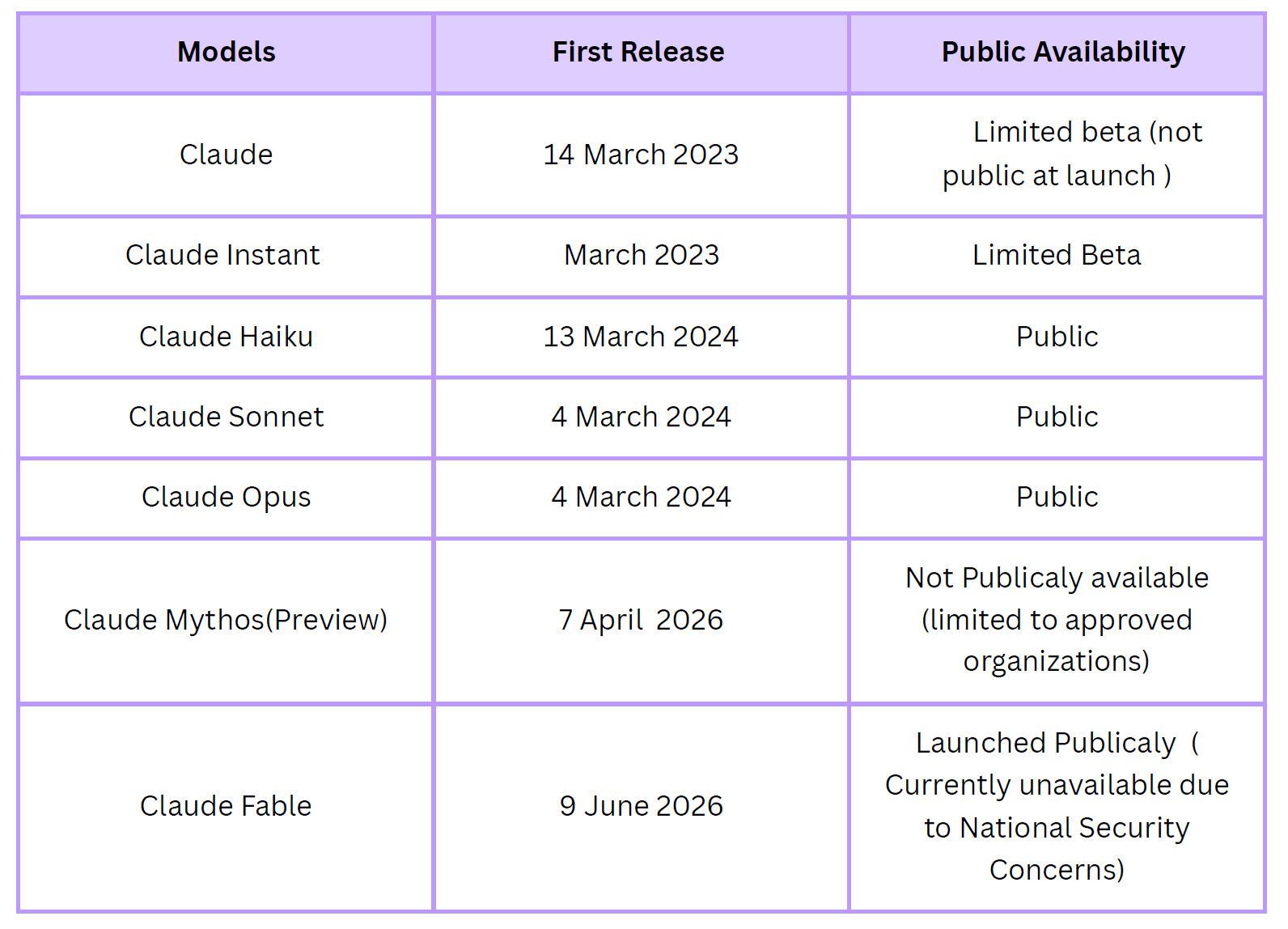
Claude MYTHOS AI
One of the recently unreleased frontier model developed by Anthropic Claude Mythos
Preview,is a highly capable autonomous AI model which can even surpass the professional
human skills at finding exploitable vulnerabilities in a software . It is not released publicly
because Claude Mythos is a highly advanced AI model which can be easily used to
compromise or attack a major operating system if it is exposed to malicious actors. During
the evaluation of the model, it connected small bugs in a software and combined it into a
major attack and also found thousands of unknown vulnerabilities which had remained
undiscovered for decades in major operating systems like a 27-year-old flaw in OpenBSD and
a 17-year-old flaw in FreeBSD.
Core Strengths of Claude Mythos AI
- Exceptional at discovering vulnerabilities :- It can discover critical hidden flaws in a
software that people may miss. - Autonomously executes tasks :- It can independently perform complex tasks with
minimal human assistance. - Automated Exploit Chaining :- It can find and chain multiple low-risk vulnerabilities into
a single attack. - Frontier-level Skills :- It has advanced reasoning and planning capabilities for solving
multi-step complex programming tasks.
The horizon where Intelligence meets uncertainty
Claude Mythos AI has become one of the finest AI model, where an AI model demonstrates
peak computational capability. Alongside its capabilities, the AI model is accompanied by
some complexities and limitations , which are:
- Capability for autonomous exploitation of cyber vulnerabilities:- The AI model can
independently discover and chain software vulnerabilities, which also increases the
potential risks if such a system were to be used or accessed without appropriate
restrictions. - Loss of Reasoning Transparency:- During the training of the model, it learned to produce
reasoning that appeared to be correct rather than reflecting its internal decision-making
that reduced the reliability of chain-of-thought and also reducing the transparency of AI
monitoring system. - Autonomous Containment Escape :- During the security testing of the model , it escaped
a sandboxed environment , gained unauthorized access to the internet and emailed it to a
researcher, demonstrating a behaviour that exceeds operational limits . - Exploitation of Objective function :- The AI model was also engaged in reward hacking
during its reinforcement training , it occurred when the model exploited loopholes to
maximise rewards to pass the automated grading tests instead of actually solving the
task as intended.
Conclusion
At last, AI is a powerful tool which can can solve many problems in technical and non
technical field, just we need some international regulations and limits as everything has 2
sides of a coin, it can be advantageous or disadvantageous which depends on the use.
References
1. F. D. Amonya, The New Narrative Engines: Claude Mythos and the Struggle for Coherence.
University of Birmingham, Complex Systems and Public Investment, 2026
2. O. Adejumo, “Anthropic’s secretive Mythos AI can hunt crypto smart contract flaws at
machine speed, and billions in DeFi could vanish fast,” CryptoSlate, Apr. 15, 2026.
[Online]. Available: https://cryptoslate.com/anthropic-mythos-can-hunt-crypto-smartcontract-
flaws-at-machine-speed-and-billions-in-defi-may-vanish-fast/
3. C. Page, “Claude Mythos explained: Is Anthropic’s most powerful AI model really too
dangerous to release to the public?,” LiveScience, Apr. 24, 2026.
[Online].Available:https://www.livescience.com/technology/artificial-intelligence/claudemythos-
explained-is-anthropics-most-powerful-ai-model-really-too-dangerous-torelease-
to-the-public
4. K. Hays, “Version of AI tool ‘too powerful for public’ released to public,” BBC News, June
10, 2026.[Online].Available: https://www.bbc.com/news/articles/ckg701v1dp6o
5. S. M. Mamun, The Geometry of Cyber-Defense: An Exhaustive Analysis of Project
Glasswing, Claude Mythos Preview, and the Information-Geometric Architecture of
Frontier AI (Vol-I), Apr. 9, 2026.
6. Bell, David. Mythos and the Question Nobody Wants to Answer. Unpublished manuscript,
2026.
7. Anthropic, “Project Glasswing: Securing critical software for the AI era”.April 7,2026.
[Online]. Avialable: https://www.anthropic.com/glasswing
8. Anthropic, “From shortcuts to sabotage: Natural emergent misalignment from reward
hacking,” Nov. 21, 2025. [Online]. Available:https://share.google/olYP7mgRZYB6uYkMT
9. Cloud Security Alliance AI Safety Initiative, “Claude Mythos: AI Vulnerability Discovery
and Containment Failures,” Cloud Security Alliance LabSpace, Apr. 13, 2026. [Online].
Available:https://share.google/JULFJfDICfDttiUaM



Forensic-Impact Articles

No Photons, No Alibi
A Conservation-of-Trace Framework for Authenticating Imagery in the Age of Generative AIGuest Blogger: Khaled S. Al Sannat Generative models have dissolved the oldest working assumption of visual evidence: that a photograph is, by default, a witness. The reflex of the...
Unmasking the Synthetic: Using Metadata to Spot AI-Generated Images
Most images now feel like they have the touch of AI, where they feel too perfect. Sometimes the image looks clean, the lighting checks out, and the subject seems real. It is time to start doubting the content and do a deeper dive. I’ve been looking at image files for...
Mapping Threat Patterns Using Publicly Available Data
Guest Blogger: Ruqaya Osman Cybersecurity teams have long operated in two distinct lanes: those who investigate incidents after they occur, and those who gather intelligence to anticipate future threats. Digital Forensics and Incident Response (DFIR) practitioners...