

Guest Blogger: Vladislav Hamppu
Many people think that online investigation is just a Google search. In reality, it’s about working with digital footprints and automation. Using my recent case as an example, here is how it works in practice:
First Environment Setup
I don’t work from a standard Windows OS. For security and speed, I use Lubuntu via VirtualBox. This is an isolated environment where all my scripts and tools are pre-configured. This is the foundation of my investigation.
Second My Tech Stack
When I need to find out who is behind a shell website (e.g., csspg.com), I don’t guess — I initiate a process:
Maigret: I run nicknames and emails through 2,500+ services. This immediately gives me all associated accounts across social media and messengers.
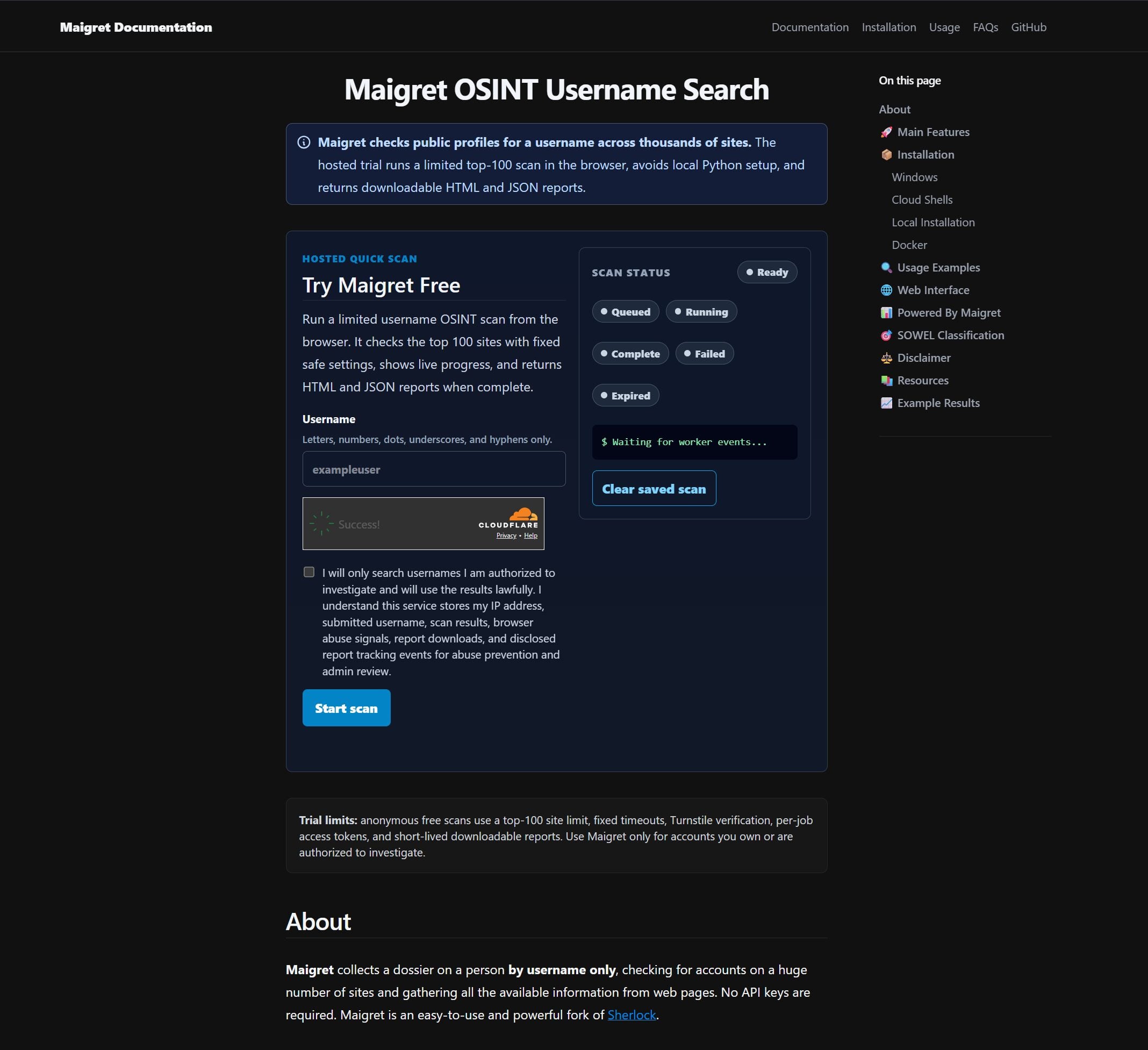
Maltego: I connect the dots. If we have a phone number or an IP, I build a relationship graph. It instantly shows how one admin is linked to multiple different firms.
Blockchain Explorers: If funds move into crypto, I “follow” them to the exact exchange where the fraudster intends to cash out.
Third Identifying Procedural Defects
My specialty is finding errors in documentation and registration. Fraudsters are often lazy — they copy-paste Terms of Service and use identical IP addresses for different scams. I identify these overlaps, which then serve as hard evidence in court.
Fourth The Deliverable
Ultimately, the client receives a Technical Investigation Report, not just an “opinion.” It clearly outlines:
● Specific bank accounts (e.g., Intesa Sanpaolo) where the funds were transferred.
● Real identities of “front men” (nominees).
● Tool-generated screenshots as forensic proof.
The Bottom Line: OSINT is not magic; it’s a proper set of tools and a methodical approach. Fewer words, more data.



Forensic-Impact Articles

No Photons, No Alibi
A Conservation-of-Trace Framework for Authenticating Imagery in the Age of Generative AIGuest Blogger: Khaled S. Al Sannat Generative models have dissolved the oldest working assumption of visual evidence: that a photograph is, by default, a witness. The reflex of the...
Unmasking the Synthetic: Using Metadata to Spot AI-Generated Images
Most images now feel like they have the touch of AI, where they feel too perfect. Sometimes the image looks clean, the lighting checks out, and the subject seems real. It is time to start doubting the content and do a deeper dive. I’ve been looking at image files for...
Mapping Threat Patterns Using Publicly Available Data
Guest Blogger: Ruqaya Osman Cybersecurity teams have long operated in two distinct lanes: those who investigate incidents after they occur, and those who gather intelligence to anticipate future threats. Digital Forensics and Incident Response (DFIR) practitioners...