

Guest Blogger: Fuzuyise Khoza
1. INTRODUCTION TO LOCAL NETWORK DECEPTION
Traditional network defense mechanisms operate reactively, relying on alert signatures after a system breach has occurred. In low-resource enterprise infrastructures or high-risk operational perimeters, defenders must deploy proactive deception strategies. An active-defense network honeypot serves as a digital “electric fence,” binding natively to local network interfaces to lure, intercept, and analyze hostile reconnaissance scans before bad actors can locate and exploit sensitive system files.
2. ARCHITECTING CYBER DECEPTION VIA PYTHON SOCKETS
The core of this autonomous intrusion prevention platform utilizes Python’s native socket communication libraries to instantiate deceptive listeners on standard high-risk target ports (e.g., SSH Port 22, Telnet Port 23, HTTP Port 80, or SMB Port 445).
When a malicious actor executes an un-credentialed automated port scan (such as an Nmap SYN reconnaissance sweep) across the subnet, the network honeypot intercepts the connection handshake mid-air. Instead of rejecting the packet, the script logs the raw raw socket connection data, mapping out the hostile source IP footprint and the precise timestamp of the initial intrusion attempt.
3. REAL-TIME TELEMETRY GEOFENCING & ALERTING PIPELINES
Uncovering the target’s source IP is only the first phase of forensic response. To accelerate threat evaluation, the honeypot automation engine immediately parses the captured IP address and triggers a secure, external geolocation API handshake loop. This extracts critical geographic telemetry variables, including the attacker’s country of origin, regional ISP handle, and spatial coordinates.
The moment the forensic telemetry string is compiled, the system triggers a localized UDP network broadcasting module. This instantly packages the structured threat log string and dispatches an immediate high-priority warning payload across the local subnet to a remote, centralized security management console, giving system administrators instant visibility into the ongoing attack vector.
4. FORENSIC REMEDIATION & INPUT HARDENING LESSONS
Deploying network deception assets provides forensic examiners with unedited, real-time adversarial data logs. By sanitizing the incoming network parameters and applying strict input validation controls, system engineers can safely capture attack payloads without risking a host system bypass.
The ultimate lesson of active network deception is the enforcement of hardened secure-coding boundaries across all enterprise assets. By implementing parameterized logic blocks and strict input verification parameters across our database layer, we ensure that even if an attacker attempts to transition from network scanning to code injection attacks, the master infrastructure remains completely un-jammable.

Figure showcases a live, aggressive Nmap service and OS detection sweep (-A) attacking the host interface, identifying an open port on 8080/tcp.
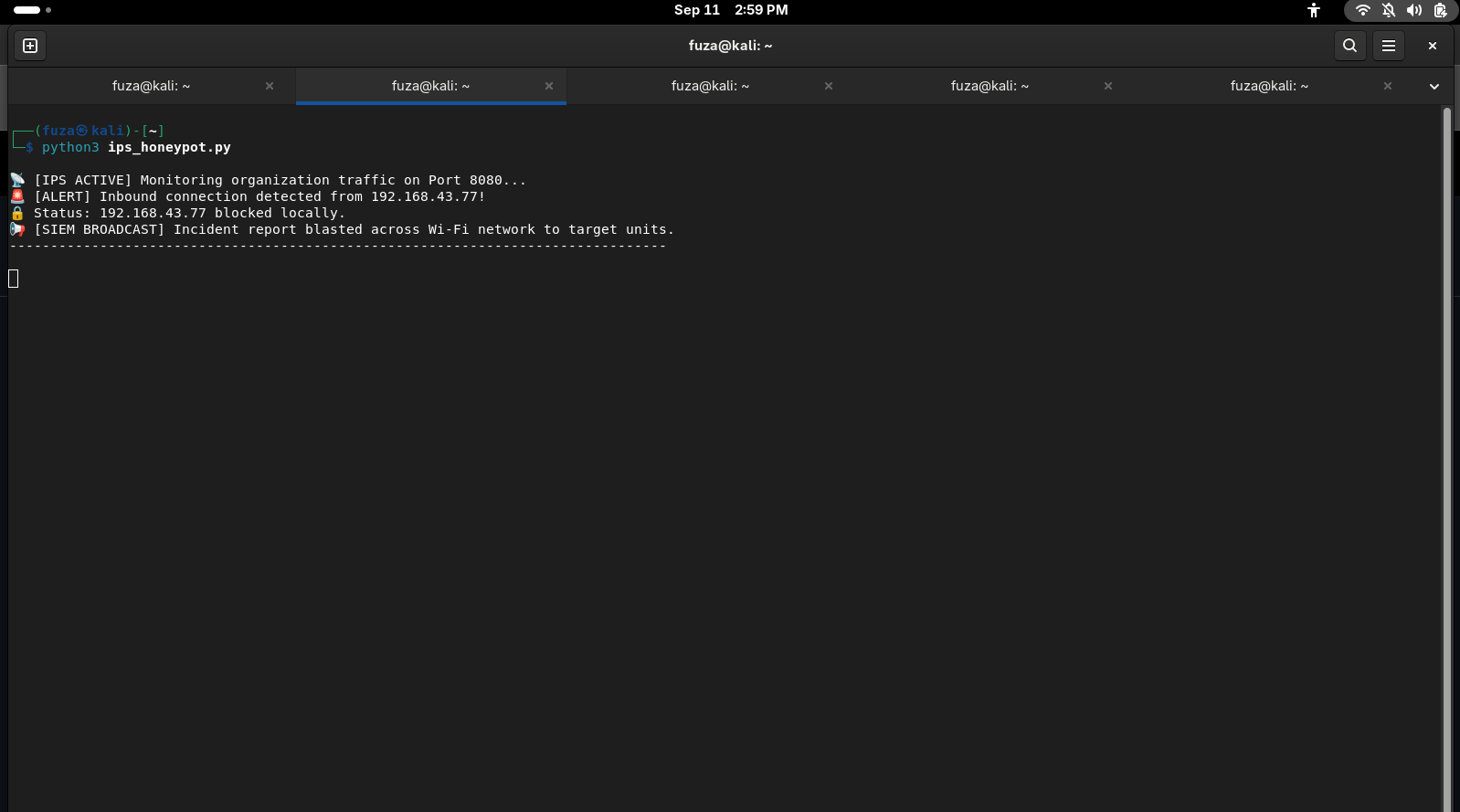
Figure showcases the custom Python socket engine capturing the inbound 192.168.43.77 handshake token, dropping an automated defensive firewall block, and broadcasting the SIEM incident report telemetry parameters across the network.


Forensic-Impact Articles

The Four Foundation Questions of Digital Forensics
In digital forensics, technology moves at lightning speed and lately at GPU speed as well. Apps, encrypted mobile operating systems, cloud artifacts, and complex IoT devices change almost daily. Yet, despite this constant evolution, the core foundation of legally...

Before Direct NAND Acquisition: Diagnosing an Undetectable Monolithic SD Card
Guest Blogger: Yevgeniy Kapishon | Aesonlabs Data Recovery Undetectable Is a Symptom, Not a Diagnosis When an SD card is not detected by a computer, reader or recovery system, the failure is often attributed immediately to the controller or NAND flash memory. With...

How OSINT Supports Compliance and Due Diligence
Guest Blogger: Issam Hanbali Open-source intelligence, commonly known as OSINT, is often associated with cybersecurity investigations, digital forensics, threat actor research, and online reconnaissance. However, OSINT also plays an increasingly important role in...